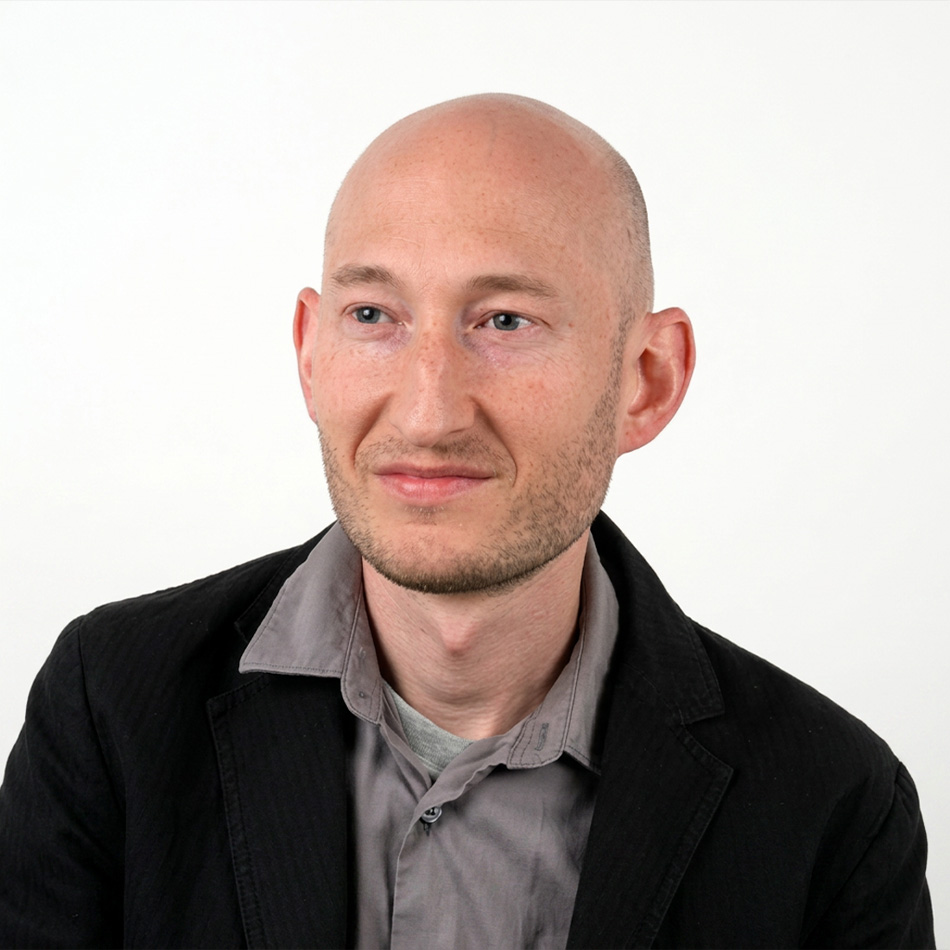
Singapore, June 2026 - The engineer behind one of the world's most-used AI systems now builds the intelligence layer for the planet's subsurface.
Atomionics has appointed Sean Gerrish as AI Advisor. His appointment marks the next stage in Atomionics' work: the instruments read the planet, and now the AI that turns those readings into decisions gets its lead.
Sean Gerrish brings production-scale machine learning experience to Atomionics. He led the team behind YouTube's recommendation system at Google, one of the most widely used AI systems in the world. His academic work includes co-authoring Black Box Variational Inference, a landmark paper in probabilistic machine learning with over 6,000 citations. He holds a PhD in Machine Learning from Princeton University, where he worked under David Blei, one of the most influential figures in modern Bayesian inference. He is also the author of How Smart Machines Think, published by MIT Press in 2018 with a foreword by Microsoft CTO Kevin Scott.
“They have the rare combination of physicists who understand the science and engineers who know how to make it work in the field. The problem of resource discovery is extraordinarily important, and I believe that recent advances in AI can help break through some of the key challenges. Even incremental improvements can have a huge impact.”
Sean Gerrish, AI Scientist, Atomionics
At Atomionics, Sean will help the development of the AI platform the company calls the AI Geologist, a system that takes the gravity measurements the instruments collect and turns them into a map of what lies beneath the surface. The work sits at the intersection of probabilistic machine learning, geophysical data, and the practical challenge of building systems that perform reliably on incomplete and unstructured data from the real world.
The appointment reflects a broader shift in how the industry is starting to think about subsurface exploration. Quantum sensing produces data at a resolution and precision that older tools could not reach. The question now is what to do with that data, how to extract meaning from it at scale. That is the problem Sean has spent his career solving, in different domains, and now at Atomionics.
.gif)





.avif)
.avif)